In 2022, running GPT-4 cost approximately $20 per million tokens. By 2026, equivalent capability costs $0.40. That 50x cost reduction in four years is not an anomaly but a pattern. Understanding this pattern, and its strategic implications, is the foundation of AI product thinking.
Software ate the world. AI is eating software. But the meal is cheaper than anyone predicted.
Paraphrased industry observationEvery AI product decision activates three simultaneous modes: AI PM frames the opportunity and success criteria, Vibe Coding rapidly prototypes to test assumptions, and AI Engineering builds the durable system. Evaluation measures whether the loop produces value. These disciplines are not sequential; they run in parallel, each informing the others.
Near-Zero Marginal Cost of AI-Generated Artifacts
The most consequential economic shift in technology over the past decade is the collapse of the marginal cost of creating software, content, and design artifacts. When you generate code with an LLM, the marginal cost of producing the thousandth line is approximately equal to the first. This differs fundamentally from traditional software development, where each additional feature requires human labor at roughly the same cost.
A senior engineer costs between $200,000 and $400,000 per year regardless of output. Whether they write 10,000 lines of code or 50,000, the cost to the company remains fixed, making the marginal cost per line roughly $4 to $40. When you introduce AI pair programming, that same engineer can produce 2x to 5x more code in the same time, effectively reducing the marginal cost per line by half or more.
Traditional software: high fixed costs, low marginal costs at scale. AI-augmented development: low fixed costs, near-zero marginal costs per artifact. This asymmetry changes which problems become economically tractable.
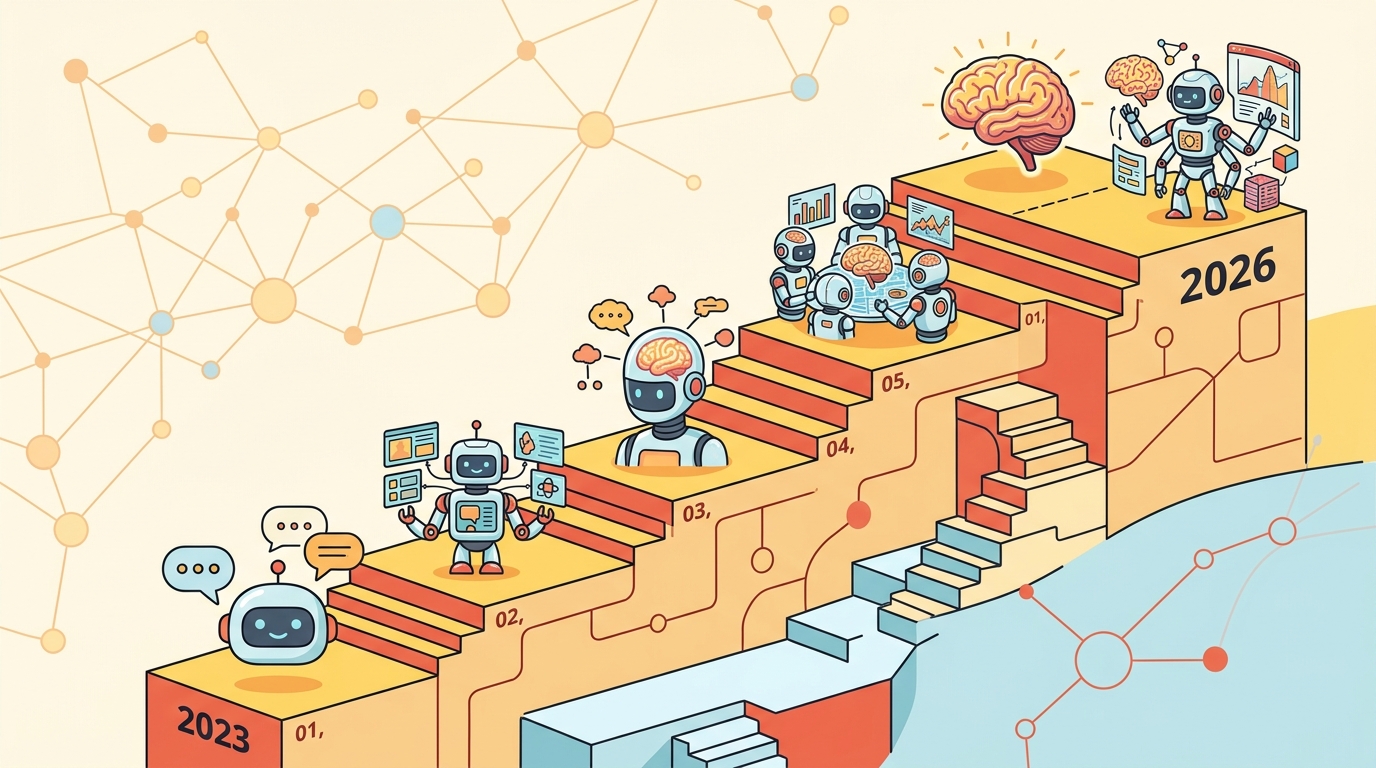
But the true revolution goes beyond coding. AI systems can now generate code from natural language descriptions, producing full functions, modules, and applications. They can generate content including marketing copy, documentation, technical specifications, and creative writing. They can generate design artifacts including UI layouts, design systems, component libraries, and interactive prototypes. They can generate synthetic training data, test fixtures, and simulation environments. They can generate analysis including research summaries, competitive analyses, and market intelligence reports.
Each of these artifact categories previously required specialized human expertise to produce. Now, with appropriate prompting and workflow design, they can be generated at a cost approaching zero.
What Still Remains Expensive
The near-zero marginal cost of artifacts does not mean building AI products is free. Several categories of expense remain substantial, and understanding them is crucial for product strategy.
In AI product development, the expensive parts are no longer the artifacts themselves but the judgment to direct their creation, the data to train or ground them, the evaluation infrastructure to measure quality, and the trust infrastructure to deploy them safely.
Human Judgment
AI can generate code, but it cannot determine whether that code solves a real user problem. AI can produce content, but it cannot always understand the subtle brand voice that resonates with your audience. AI can generate designs, but it cannot replace the product manager who understands which trade-offs matter for your specific users.
Human judgment is expensive because it requires experience, context, and accountability. A junior PM might make 50 decisions per day; a senior PM makes the same 50 decisions but with deeper understanding of downstream implications. AI does not yet replicate this depth of contextual reasoning.
Quality Data
Large language models are trained on public data, but your product needs domain-specific, often private, high-quality data. Acquiring, cleaning, labeling, and maintaining this data remains expensive. Medical diagnosis AI, for instance, requires curated clinical data, expert annotations, and ongoing validation. Legal document review needs attorney-reviewed training sets and continuous updates as case law evolves. Financial forecasting relies on proprietary market data, economic indicators, and historical patterns. The best open-source model in 2026 might match GPT-4 performance on general tasks, but your domain-specific application likely requires data that only you possess.
Evaluation Infrastructure
Evaluating AI products presents unique challenges. Traditional software has clear metrics like test coverage, error rates, and response times. AI products require more nuanced evaluation. You need to determine whether the output actually solves the user's problem, whether the AI is being consistent across similar inputs, whether there are subtle failure modes that human testers miss, and how you detect model regression when you update.
Building robust evaluation pipelines, often called evals, is one of the most underestimated costs in AI product development. Teams typically spend 30-40% of their engineering time on evaluation infrastructure.
Before building AI features, define your measurement strategy. In cost structure planning, this means treating evaluation infrastructure as a first-class expense rather than an afterthought. A micro-eval for cost structure might track: artifact quality scores per dollar spent, iteration velocity before and after AI adoption, and the ratio of exploration to exploitation spending. Teams that instrument evaluation early make better build-versus-buy decisions because they can quantify the actual cost of unreliability.
Deployment and Operations
Running AI in production requires significant infrastructure investments. GPUs are expensive and LLM inference is compute-intensive, creating ongoing costs that never fully go away. Users expect sub-second responses, but AI often requires longer processing times, forcing teams to balance latency against cost. Traffic spikes can crash AI features that lack proper capacity planning, while tracking AI behavior in production to detect drift and failures demands continuous monitoring investment.
Trust and Adoption
Perhaps the most expensive category is trust. Getting users to rely on AI-generated outputs, getting enterprises to approve AI-powered workflows, and getting regulators to approve AI-enabled decisions all require substantial investment.
Trust is not built through documentation or legal agreements. It is built through consistent, reliable, transparent behavior over time. This investment is recurring and cannot be automated away.
Economics of Exploration vs. Exploitation
The traditional software development cycle involves extended exploration phases followed by committed exploitation. You explore requirements, explore architecture, explore design, then commit to building. Once shipped, changes are expensive and require careful handling.
In traditional software, exploration is expensive because each prototype requires significant human effort. This creates pressure to limit exploration upfront, which leads to building the wrong thing confidently.
AI changes this calculus fundamentally. When artifact generation is cheap, you can afford to explore more possibilities before committing.
In traditional software, exploration is expensive because each prototype requires significant human effort. This creates pressure to limit exploration upfront, which leads to building the wrong thing confidently. Requirements are captured in document-based specs with limited iterations. Design involves high-fidelity mockups with few variants. Development includes code review gates with limited experimentation. Content requires copywriters and approval chains.
With AI-augmented development, the same phases transform. Requirements become interactive prototypes with rapid validation. Design explores multiple directions with A/B testing at scale. Development enables continuous deployment with feature flags. Content shifts to AI generation with human curation. This shift has profound implications for product strategy. The companies that will win in the AI era are not those with the best models but those with the best processes for rapid exploration and iteration.
QuickShip, a logistics optimization startup, reduced their feature development cycle from 6 weeks to 4 days. Their team of 8 engineers uses AI pair programming for code generation, AI-generated UI mockups for design exploration, and synthetic data for testing. The key insight: they invest the time saved in deeper user research and evaluation infrastructure rather than building more features.
Their result: 3x more experiments run per quarter, 60% reduction in time-to-market, and NPS scores 25 points higher than competitors.
Comparison with Traditional Software Costs
To understand the magnitude of change, consider a realistic feature development scenario: building a document summarization feature for a B2B SaaS product.
| Cost Category | 2022 (Traditional) | 2026 (AI-Native) |
|---|---|---|
| Requirements & Design | $30,000 (PM + Designer, 4 weeks) | $10,000 (PM + AI tools, 1 week) |
| Model Selection & Integration | $100,000 (ML team, 3 months) | $5,000 (Engineer + API, 1 week) |
| Training & Fine-tuning | $200,000 (GPU + Data + Training) | $500 (Prompt engineering + retrieval) |
| UI/UX Implementation | $40,000 (Frontend team, 6 weeks) | $15,000 (Engineer + AI code gen, 2 weeks) |
| Testing & QA | $25,000 (QA team, 3 weeks) | $5,000 (Automated + AI-assisted) |
| Total | $395,000 | $35,500 |
The 90% cost reduction is not hypothetical. It reflects the actual experience of teams that have adopted AI-native development practices. The gap will likely widen as AI capabilities continue to improve.
When building AI features costs 90% less, the barrier to entry for any AI-powered category drops dramatically. Competitive advantage shifts from feature availability to data advantages, brand trust, and distribution.
A frequent misunderstanding is that AI's reduced costs mean human judgment is no longer valuable. In reality, as artifact creation becomes cheap, judgment becomes more valuable because it directs which artifacts matter. An AI can generate 10,000 lines of code, but a product manager must determine which 100 lines solve the user's actual problem. Teams that over-invest in generation and under-invest in judgment produce impressive artifacts that nobody uses.
For your current or planned product, identify which features would benefit most from AI generation across code, content, design, and data. Then assess what percentage of your development costs fall into the expensive categories of judgment, data, evals, and trust. Finally, consider how a 10x cost reduction would change your product roadmap priorities.
Continue Learning
Up next: Section 1.2: AI as Compression of Artifact Creation — Explore how AI compresses the entire artifact creation pipeline and what that means for product iteration speed.