Applying scientific principles to AI products requires all three disciplines working together: AI PM identifies which principles are most relevant to your product domain and decides which ones to prioritize in your strategy; Vibe-Coding rapidly tests whether principles hold in your specific context through quick experiments; AI Engineering builds systems that embody these principles as architectural invariants that persist through updates and scale.
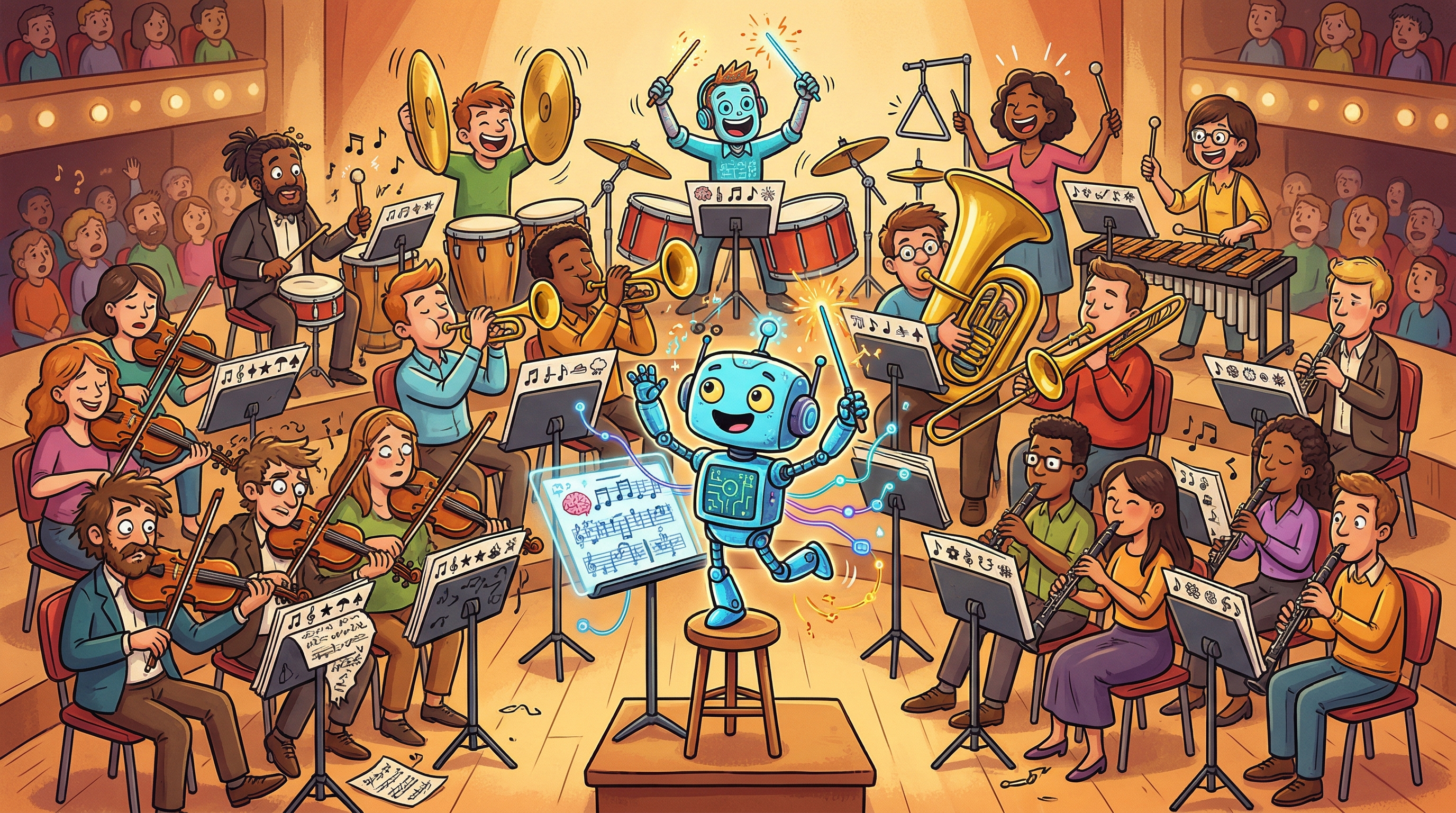
Test your mental models of AI behavior through vibe coding experiments. When a principle states that AI systems are probabilistic, quickly prototype scenarios that demonstrate this behavior. When a principle says trust requires design, explore what happens when you do not calibrate confidence indicators. Vibe coding lets you falsify your assumptions about how principles manifest in practice, building genuine intuition rather than just theoretical understanding.
Objective: Ground your AI product decisions in scientific principles and philosophical frameworks that hold up under production stress.
Chapter Overview
This chapter establishes the conceptual spine that the rest of the book repeatedly references. You will encounter principles that explain why AI products behave differently from traditional software, why they require new approaches to quality assurance, and why human judgment remains irreplaceable even as AI capabilities expand.
Four Questions This Chapter Answers
- What are we trying to learn? The scientific and philosophical principles that explain why AI products require fundamentally different approaches to quality, trust, and system design.
- What is the fastest prototype that could teach it? A case study analysis of a failed AI product, applying each principle to diagnose what went wrong and what could have been done differently.
- What would count as success or failure? Ability to explain why traditional software testing assumptions break down for AI systems, and how to design evaluation-driven approaches instead.
- What engineering consequence follows from the result? Every AI product decision should be grounded in these principles: evaluation primacy, probabilistic systems thinking, sociotechnical unity, and trust-requires-design.
The Principle of Probabilistic Systems
AI systems are probabilistic, not fully programmable. This is not a limitation to work around; it is the fundamental nature of intelligence, artificial or otherwise.
The Sociotechnical Unity Principle
AI product quality is fundamentally sociotechnical. The performance of an AI product cannot be separated from the social context in which it operates.
The Evaluation Primacy Principle
Evaluation is the primary epistemic instrument. When intuition conflicts with evaluation data, evaluation wins, every time.
The Judgment Scarcity Principle
Marginal cost of creating artifacts has collapsed, but judgment has become more valuable. The abundance of AI-generated content makes discernment more precious, not less.
The Interface-as-Control Principle
Interfaces are control systems. Every user interface, every API, every prompt is a control loop that shapes system behavior.
The Trust-Requires-Design Principle
AI products require explicit trust design. Trust cannot be assumed; it must be architected into every layer of the system.
Learning Objectives
- Understand why AI outputs are inherently probabilistic and how to design for this reality
- Apply bounded rationality concepts to human-AI collaboration design
- Recognize when to leverage human strengths versus AI capabilities
- Design feedback loops that improve AI product quality over time
- Build trust through calibrated confidence and transparent uncertainty communication
- Create interfaces that serve as effective control systems
Sections in This Chapter
- 4.1 Probabilistic Systems and Evidence-Based Quality
- 4.2 Bounded Rationality and Human-AI Complementarity
- 4.3 Sociotechnical Systems and Organizational Design
- 4.4 Control Loops and Feedback System Design
- 4.5 Economics of Abundance and the Value of Judgment
- 4.6 Trust, Calibration, and Interface Design
Role-Specific Lenses
Product Managers
Use these principles to make go/no-go decisions on AI features, to explain to stakeholders why AI products require different quality bar conversations, and to design requirements that acknowledge AI variability.
Designers
Apply sociotechnical thinking and interface-as-control principles to create AI interfaces that guide users toward effective collaboration with probabilistic systems.
Engineers
Understand why traditional software testing assumptions break down for AI systems, and learn evaluation-driven development approaches that handle probabilistic behavior.
Leaders
Recognize that AI product strategy requires new mental models, that evidence must outweigh intuition, and that trust architecture is a competitive advantage.