When implementation becomes nearly free, the fundamental economics of software development shift. Traditional development was designed to minimize expensive human rework—measure twice, cut once. Vibe-coding reverses this: when code can be regenerated in seconds, the cost of change drops to near zero. The old habit of extensive upfront planning becomes a liability, not a virtue. The bottleneck shifts from code production to judgment—knowing what to build, what to trust, and when to stop iterating.
Designing AI-native prototyping workflows brings all three disciplines together: AI PM defines the workflow stages (framing, scaffolding, core loop, polish) and what each stage should achieve; Vibe-Coding executes each stage rapidly, using AI to generate context, scaffold repos, iterate on prototypes, and polish results; AI Engineering ensures each workflow stage produces artifacts that can be evaluated, tested, and eventually hardened for production.
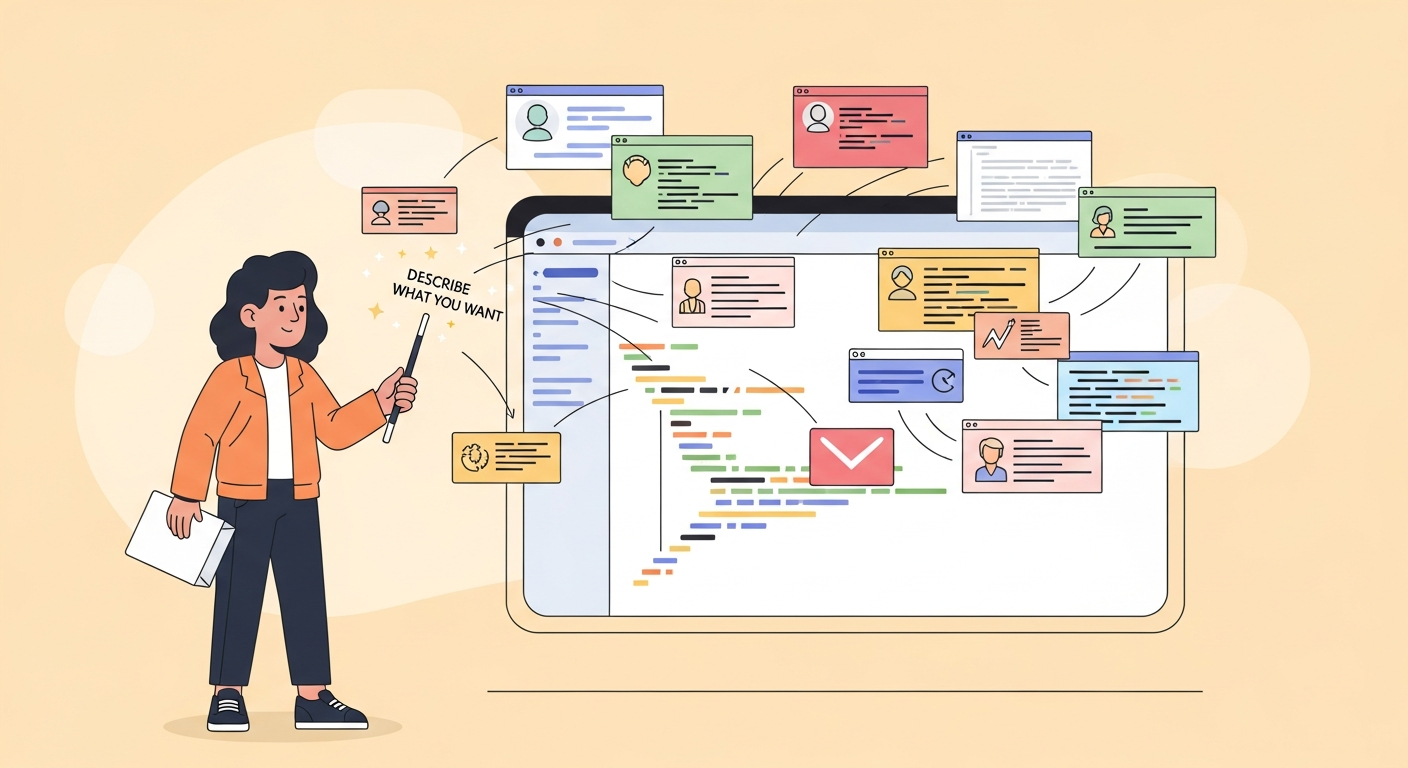
Objective: Master the workflow from idea to AI-powered prototype.
Chapter Overview
This chapter covers the complete workflow for AI-native prototyping. You will learn the four-stage pipeline from concept to prototype, context shaping and repo scaffolding, spec-prototype-critique-revise loops, and patterns for working with AI-generated components.
Four Questions This Chapter Answers
- What are we trying to learn? How to systematically move from a product concept to a working AI prototype that answers specific questions about feasibility or desirability.
- What is the fastest prototype that could teach it? Running a complete SPCR (Spec-Prototype-Critique-Revise) loop on a single small feature to internalize the workflow rhythm.
- What would count as success or failure? A prototype that definitively answers the specific question it was designed to test, not a working system that raises more questions.
- What engineering consequence follows from the result? Effective prototyping workflows reduce the number of unproductive full-build attempts by validating assumptions first.
Learning Objectives
- Design effective prototyping workflows
- Shape context for effective AI collaboration
- Run iterative SPCR loops
- Work with AI-generated UI, backend, and data mocks
Sections in This Chapter
- 11.1 Concept to Runnable Prototype The four-stage pipeline: framing, scaffolding, core loop, polish
- 11.2 Context Shaping and Repo Scaffolding Building context documents and project structures that enable effective AI collaboration
- 11.3 Spec-Prototype-Critique-Revise Loops Iterative refinement patterns for AI-native prototyping
- 11.4 Working with AI-Generated UI, Backend, and Data Mocks Patterns for generating and integrating AI-created components