Launching AI products requires all three disciplines: AI PM defines the rollout strategy, success metrics, and rollback criteria; Vibe-Coding tests rollout mechanisms and monitors early signals before full launch; AI Engineering implements the deployment, monitoring, and rollback infrastructure that makes rollout safe.
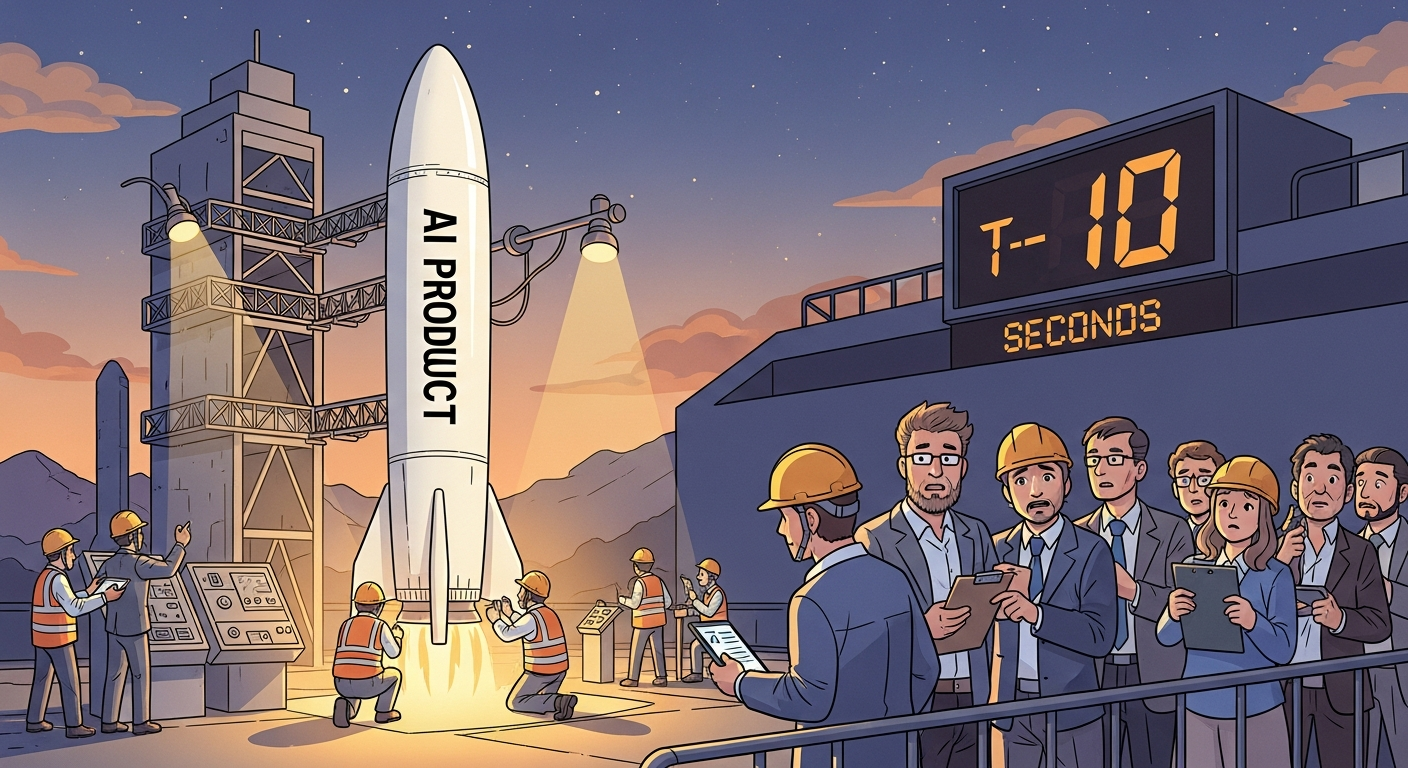
Vibe-coding accelerates launch readiness testing by enabling rapid simulation of launch scenarios. Test how your AI behaves with different user segments, edge cases, and failure modes before going live. Vibe-coding launch readiness helps you identify gaps in staging, monitoring, and rollback procedures that formal testing might miss, reducing the risk of problematic launches.
Objective: Learn AI-specific launch strategies including staged deployments, user education, and expectation management.
Chapter Overview
This chapter covers the unique challenges of launching AI features: canary and shadow mode deployments, staged rollouts with user education, and setting appropriate expectations while ensuring support readiness.
Four Questions This Chapter Answers
- What are we trying to learn? How to launch AI features in a way that manages user expectations and catches failures before they affect everyone.
- What is the fastest prototype that could teach it? A shadow mode launch where AI features run alongside existing features to observe behavior without user impact.
- What would count as success or failure? Launch processes that catch AI failures early, educate users appropriately, and build rather than destroy trust.
- What engineering consequence follows from the result? AI launches require staged rollout infrastructure, monitoring, and support readiness that traditional software launches do not.
Learning Objectives
- Implement canary and shadow mode deployments for AI systems
- Design staged rollout strategies with appropriate segment selection
- Set user expectations through education and communication
- Prepare support teams for AI-specific challenges
Sections in This Chapter
Cross-References
- Chapter 27: Post-Launch Learning Loops - Production evals and continuous improvement that follow successful launches
- Chapter 28: Team Topologies and AI-Native Operating Models - Team structures that support staged rollouts and launch execution
- Chapter 21: Evaluation as a Development Discipline - Eval frameworks that inform launch readiness